‘Shrek’ (2001) Review: The Underdog That Became a Beloved Film
25 years later and the unlikely success still thrives in the ever changing online sphere.

Shrek; Movies; Directed by Andrew Adamson, Vicky Jenson; Fantasy, Comedy; PG; 1h 29m
It’s crazy to believe it’s been 25 years since the cult classic Shrek (2001) released in theaters, especially with its prevalence in modern internet pop culture. If you ask anyone under the age of 30 if they’ve seen Shrek, I wouldn’t be surprised if the majority of them say yes.
What was once a project Dreamworks had no faith in, as the studio sent underperforming animators to work on it (which colloquially became known as being “Shreked”), became the flagship series of the animation studio.

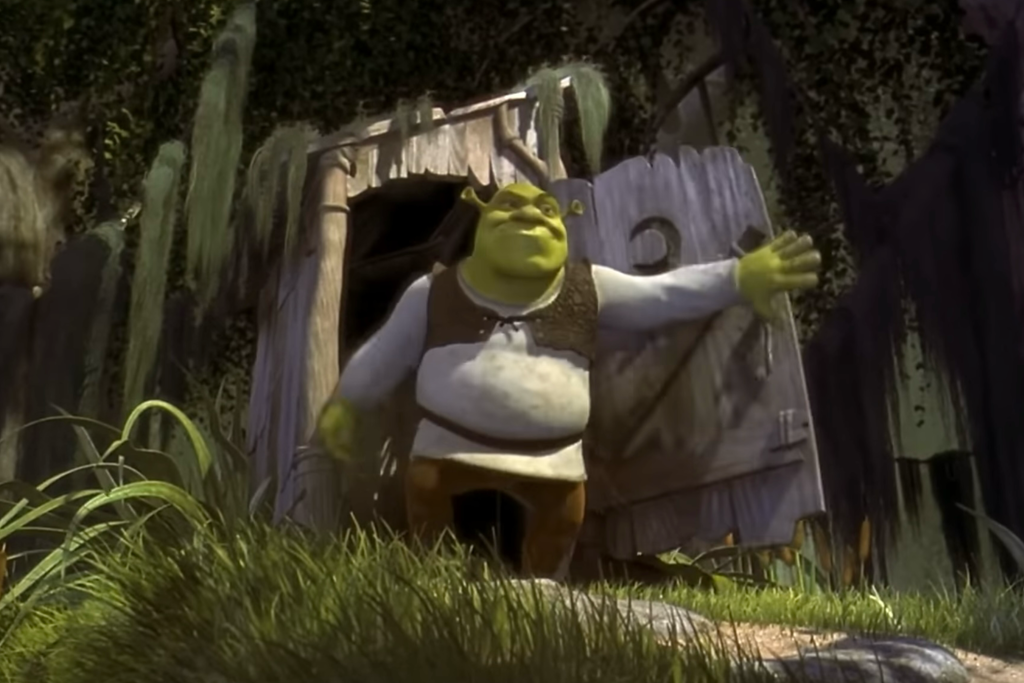
The movie follows the titular Shrek (Mike Myers), an isolated and ostracized ogre who wants nothing to do with others. However, when the tyrannical Lord Farquaad (John Lithgow) evicts all the fairy tale creatures from Duloc (who end up seeking refuge in Shrek’s swamp), Shrek agrees to help Farquaad find the beautiful Princess Fiona (Cameron Diaz) in exchange for getting his swamp back to himself. With the help of a talking donkey (Eddie Murphy), Shrek sets out on a quest that will change his life.
Off the bat the premise is quite different from other fairytale stories. This was especially the case back in the early 2000s, when children’s fantasy stories mainly focused on tales of princesses being rescued by dashing princes from evil (often unattractive) beasts or elderly people. Not to mention the fact that the Disney Renaissance, which upheld and reinstalled these ideas, had only ended only two years ago.
Nevertheless, Shrek flips the script and subverts the audience’s expectations. This time, it’s the conventionally unattractive “beast” who saves the princess (even though she was more so playing along and could escape anytime she wanted) while the ruler of the kingdom is the actual villain of the story.

One big part of Shrek that made it stand the test of time was the writing. It was witty and clever with references to pop culture old and new. It also weaved a narrative with a meaningful message while also challenging preconceived notions the viewers may have had coming into the film.
The animation also holds up pretty well (although you can tell it’s from the 2000s) as it leans into a more realistic art style while still adding some cartoony traits to the characters and their environments. The art and setting itself is also quite different from a typical fantasy film of the time: instead of a 2D film set in a time long ago, it’s a 3D film whose environment incorporates modern inventions (such as turnstile gates and sunglasses).
The acting was great throughout and helped make the dialogue stand out. Some of the most iconic moments of the film come from the way the actors read their lines. The voices were fitting and the lines felt natural.

Although the characters may not seem like much on the surface, they actually have layers. Shrek loathes himself because everyone around him despises him, which leads him to isolate himself in his swamp. Fiona is afraid of being her true self around others because of the way her parents treated her.
At its core, Shrek is about learning to accept yourself. It’s present in both Shrek and Fiona’s character arcs. Both are afraid to show their true selves to each other because of the hatred and rejection they’ve faced in their past. Shrek takes what others say to heart and plays into the idea of a monster that the villagers have created. Meanwhile, Fiona sees the ogre side of herself to be a curse, but at the end of the film, it’s revealed to be just another part of her.

In conclusion, Shrek’s wit and humor have kept the classic relevant over the years and were the keys that made it such a massive success. It’s a film that you can watch years later and still appreciate, as its content is more than meta jokes and subversive punchlines, as it also has a genuine heart.
Rating: 8/10

Designed with WordPress